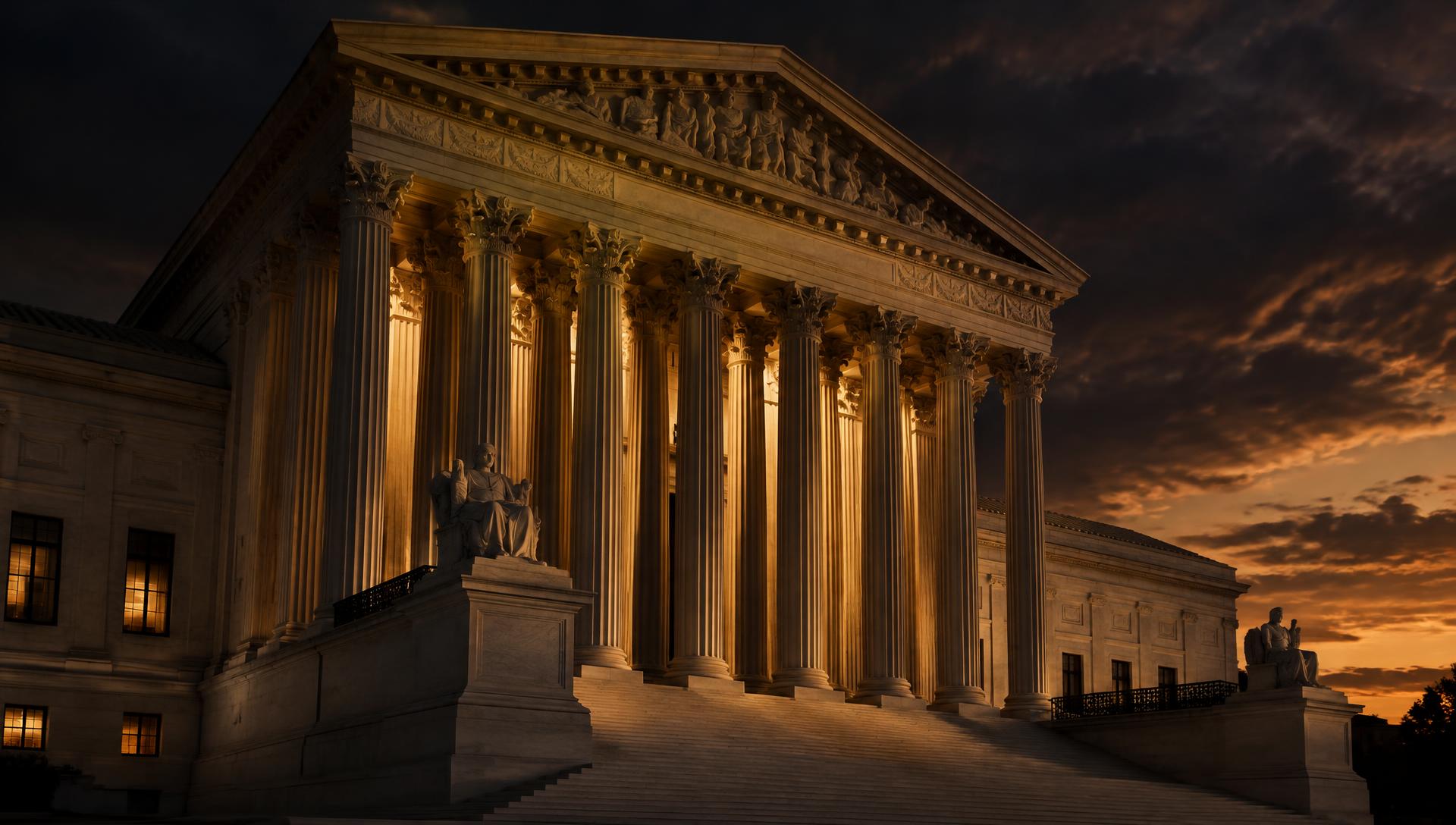
On December 2, 2026, the United States Supreme Court is scheduled to hear arguments in a constitutional dispute that could significantly influence the future of American firearms law.
At the center of the controversy is a question that has generated decades of legal debate:
Does the Second Amendment protect the possession of AR-15-platform and similar semiautomatic rifles?
For millions of Americans, the answer carries implications beyond any particular firearm.
It concerns constitutional interpretation, individual liberty, public safety, and the limits of governmental authority.
And once again, the nation's highest court has been asked to examine where those constitutional boundaries lie.
The Cases Before the Court
The Supreme Court has agreed to consider two consolidated cases:
- Viramontes v. Cook County
Supreme Court Docket No. 25-238 - Grant v. Higgins
Supreme Court Docket No. 25-566
The cases challenge restrictions involving AR-15-platform and similar semiautomatic rifles.
The central constitutional question is whether the Second and Fourteenth Amendments guarantee the right to possess these firearms.
The Court's eventual decision could clarify how constitutional protections apply to commonly owned semiautomatic rifles.
However, the precise scope of any ruling will depend on the Court's reasoning.
The Constitutional Question
The Second Amendment states:
"A well regulated Militia, being necessary to the security of a free State, the right of the people to keep and bear Arms, shall not be infringed."
Those twenty-seven words have generated some of the most consequential constitutional debates in American history.
In District of Columbia v. Heller (2008), the Supreme Court recognized an individual right to possess firearms for lawful purposes, including self-defense within the home.
In McDonald v. Chicago (2010), the Court held that the Second Amendment applies to state and local governments through the Fourteenth Amendment.
In New York State Rifle & Pistol Association v. Bruen (2022), the Court emphasized constitutional text and historical tradition when evaluating firearm regulations.
The cases now before the Court raise additional questions about which firearms fall within constitutional protection.
Two Competing Constitutional Arguments
Supporters of the legal challenges argue that AR-15-platform rifles are commonly possessed by law-abiding Americans for lawful purposes.
They maintain that these firearms qualify as protected arms under the Second Amendment and that broad prohibitions conflict with the Supreme Court's existing precedents.
Defenders of the challenged restrictions emphasize public safety and argue that governments retain authority to regulate weapons they consider particularly dangerous.
They also dispute how historical firearm regulations and Supreme Court precedents should apply to modern semiautomatic rifles.
These disagreements concern constitutional interpretation as much as firearms policy.
The Court must determine how existing constitutional principles apply to the restrictions under review.
"Constitutional liberty cannot be preserved through ignorance of the very principles that establish it."
Why This Case Matters
The outcome could influence how courts evaluate restrictions on semiautomatic rifles.
It may also affect future litigation, state legislation, and the legal framework used to examine Second Amendment claims.
But an important distinction must be made.
The Supreme Court has not yet issued a decision in these consolidated cases.
The scheduled December arguments are part of the judicial process, not its conclusion.
Until the Court rules, predictions about the ultimate outcome remain speculation.
The Ninth Spur Perspective
At The Ninth Spur Covenant, constitutional literacy and responsible civic participation are central to our advocacy mission.
We believe Americans should understand the constitutional foundations of their rights, the laws governing those rights, and the judicial decisions that shape their application.
The Second Amendment deserves serious legal examination rather than slogans, misinformation, or political theatrics.
Understanding the Constitution requires more than memorizing its language.
It requires studying its history, examining judicial precedent, and recognizing the responsibilities that accompany constitutional freedoms.
Through The Watchtower, we will continue following developments that influence constitutional law and individual rights.
Our commitment is to informed advocacy, lawful participation, historical understanding, and public education.
What Happens Next?
Oral arguments are scheduled for December 2, 2026.
Following arguments, the justices will deliberate before issuing their decision.
The Ninth Spur Watchtower will continue following the proceedings and examining the constitutional questions involved.
Readers are encouraged to review the Court's official filings and arguments rather than relying solely on headlines.
The Constitution is not merely a historical document displayed behind glass.
It remains a living part of America's legal and civic institutions.
Its interpretation shapes the relationship between citizens and government.
Its protections generate difficult questions.
And its preservation requires an informed public willing to understand those questions.
On December 2, the Supreme Court will hear arguments concerning one of the most debated provisions of the Bill of Rights.
Whatever the eventual outcome, the importance of constitutional literacy remains unchanged.
At The Ninth Spur Covenant, we believe that understanding liberty is an essential part of preserving it.